Daylight Factor Assessment Tool
An interactive application for analyzing internal daylight levels and external obstructions.
Average Daylight Factor Theory
Another broad measure for assessing the adequacy of skylight during the early stages in design is the average daylight factor. This is the mean daylight factor in a room over the horizontal working plane.
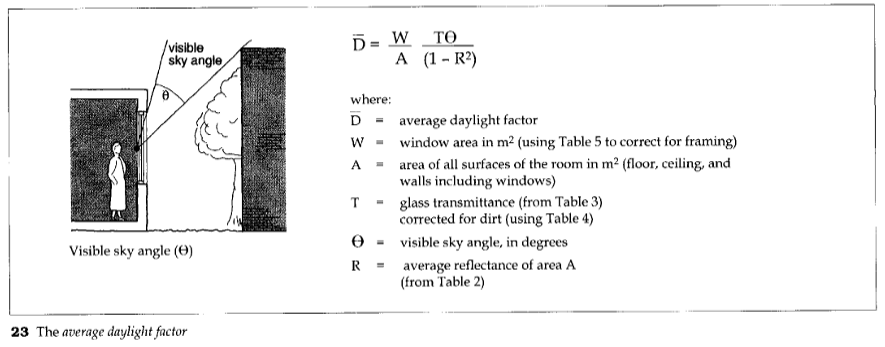
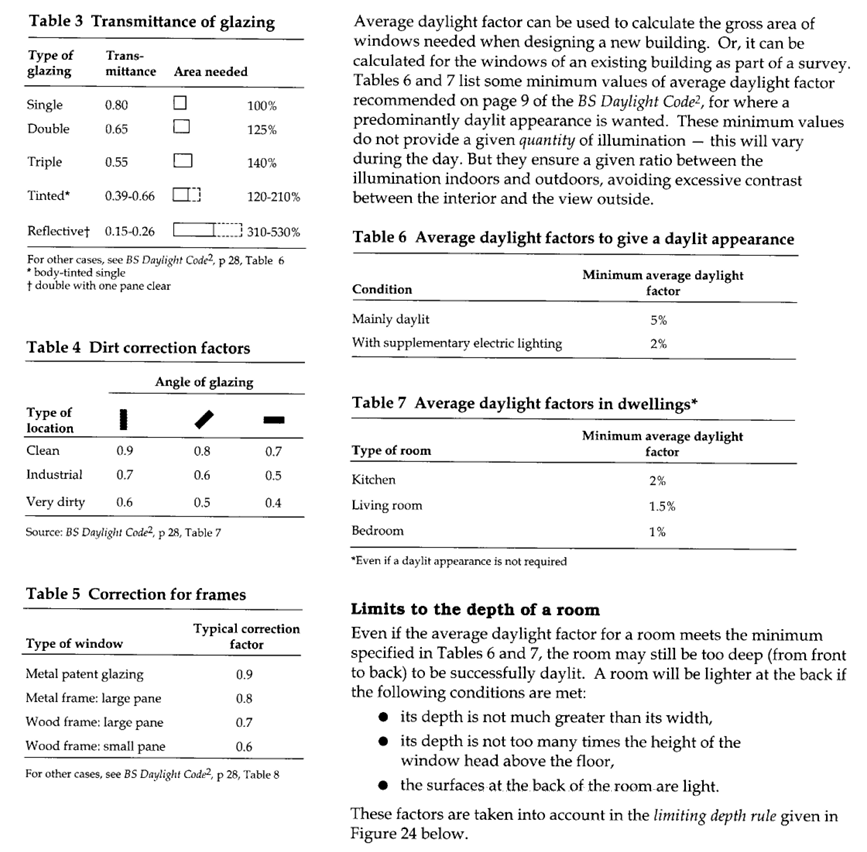
The formula below is used to calculate the average daylight factor for windows and rooflights. Tables 3, 4, and 5 give a selection of data from the BS Daylight Code for use in the formula. Note that single glazing transmits more light than double glazing, and far more than most tinted and reflective glazing.
By inspecting the formula, we can see what influences its value. The daylight factor will be greater if:
- The window is large in proportion to all the surfaces inside the room on which its light is spread (i.e., W/A is large).
- The window is clean and transparent (i.e., T is large).
- A large angle of open sky can be seen from the window (i.e., Θ is large).
- The internal surfaces of the room are light (i.e., R is large).
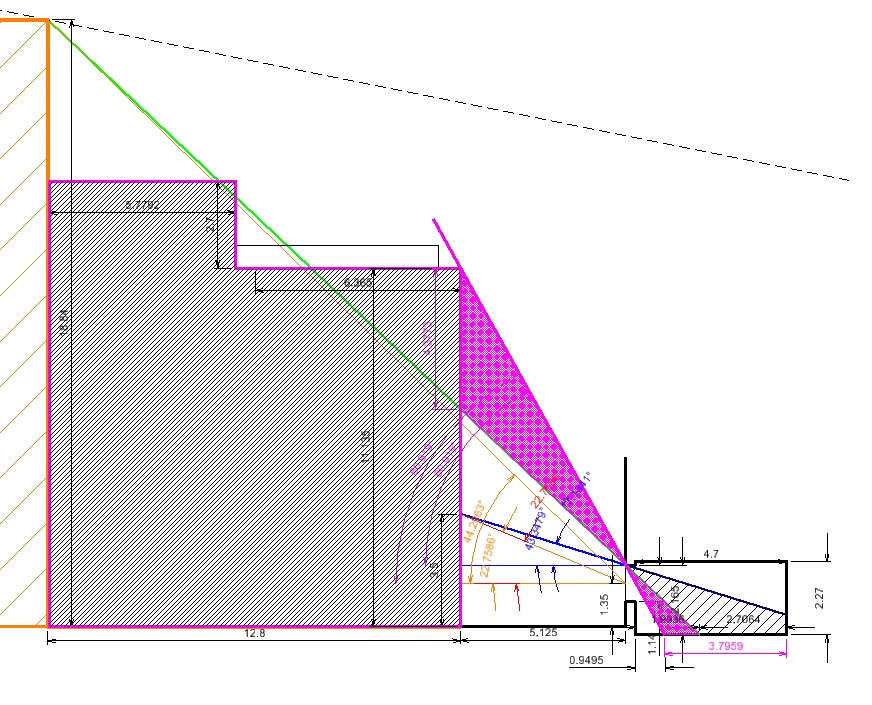
Forensic Visible Sky Angle (Θ) & No Sky Line (NSL) Assessment
Parametric cross-section mapping exterior daylight obstructions and the progressive loss of interior skylight. Verify the impact of varying boundary proximities against the static CAD proof above.